

Insights · Procurement & Landed Cost
China Factory Price vs Landed Cost in Australia.
A practical guide for Australian businesses comparing China manufacturing with local supply — and understanding what the product really costs after tooling, freight, import charges, quality control and final delivery.
Factory Price Is Only the Starting Point
A China factory quotation can look significantly cheaper than an Australian supplier quote. But factory price and commercial cost are not the same thing.
For Australian businesses, the number that matters is usually the landed cost at the point where the product is actually usable by the business. That means looking beyond the unit price and including the costs required to develop, manufacture, move, clear and deliver the goods.
The cheapest factory quotation is not always the cheapest supply solution.
1. Factory Price Is Not the Real Cost
The price provided by a manufacturer may represent only one stage of the supply chain. Depending on the quotation basis, additional costs may sit outside the factory price.
For example, a low ex-factory price may still require:
- Tooling or setup fees
- Sample development
- China domestic transport
- Export handling
- International freight
- Import clearance
- Duty or tax where applicable
- Australian port and terminal charges
- Final delivery to the customer's warehouse, winery, brewery or site
- Quality inspection or production monitoring
This is why comparing one supplier's FOB price against another supplier's delivered Australian price can produce a misleading result.
2. What Makes Up Landed Cost?
There is no single cost structure that applies to every product, but a practical landed-cost assessment usually considers the following categories.
Typical components of landed cost
3. EXW vs FOB vs CIF vs Door-to-Door
Quotation terms matter because they determine which costs are included and where responsibility transfers.
| Quotation Basis | Factory / Product | China Origin Logistics | International Freight | Australian Clearance | Final Delivery |
|---|---|---|---|---|---|
| EXW | Typically included | Usually buyer-managed | Buyer-managed | Buyer-managed | Buyer-managed |
| FOB | Included | To agreed export point | Buyer-managed | Buyer-managed | Buyer-managed |
| CIF | Included | Included to agreed point | To destination port | Usually not final delivery | Usually separate |
| Door-to-Door | Included | Included | Included | Can be coordinated | To agreed destination |
Incoterms define commercial responsibilities and risk transfer, but an individual quotation may still contain exclusions. Always confirm exactly what is included rather than relying on the term alone.
4. Why Freight Can Change the Decision Completely
Freight has a very different impact depending on the product. Small, high-value items may carry freight efficiently. Large, heavy or low-value products can behave very differently.
This is particularly important for products such as:
- Glass bottles
- Beverage cans and bulky packaging
- Large agricultural products
- Steel or fabricated components
- Modular or project-specific products
- Low-value products with high cubic volume
A product can be cheap to manufacture but expensive to move.
That means factory price should be assessed together with carton dimensions, palletisation, container utilisation, gross weight and final Australian transport requirements.
5. MOQ, Unit Price and Total Cash Commitment Are Different Things
Increasing quantity often reduces unit price, but it can also increase total cash tied up in stock, freight requirements and warehousing.
May suit product testing, uncertain demand or early-stage commercialisation.
May improve manufacturing economics, but only when the inventory can realistically be used or sold.
The correct decision is therefore not always the quantity with the lowest factory unit price.
6. Separate Tooling and One-Off Development Costs
Custom manufacturing often involves costs that should not be confused with recurring product cost.
- Moulds and tooling
- Cutting dies
- Printing plates
- Artwork setup
- Engineering or drawing preparation
- Prototype or sample development
- Testing and compliance work
Costs that may only be required to establish the product or production setup.
Product, packaging, production and logistics costs that recur on future orders.
This makes it easier to understand whether the first order appears expensive because of development costs, or whether the underlying repeat-order economics are actually weak.
7. Import Charges, Duty and Tax Need to Be Confirmed
Import costs vary by product, classification, shipment structure and other commercial factors. Duty, tax and clearance treatment should therefore be confirmed for the actual product rather than assumed from another shipment.
The relevant tariff classification, origin, declared value and applicable trade arrangements can affect the final calculation.
This article explains procurement cost structure only. Product-specific duty, tax and customs treatment should be confirmed with the appropriate customs broker, freight forwarder or professional adviser before import.
8. The Goods Arriving at an Australian Port Is Not the End of the Cost
A quote to Fremantle, Melbourne, Sydney or another port is not the same as a delivered cost to the customer's final location.
- Port or terminal charges
- Customs clearance
- Container delivery
- Unpacking or pallet handling
- Regional transport
- Storage
- Waiting time or special handling
This matters particularly for businesses outside metropolitan areas where the final delivery leg can materially affect total project economics.
9. Compare China Landed Cost Against Your Current Australian Delivered Cost
The most useful benchmark is usually not an Australian supplier's headline unit price. It is the customer's current delivered cost for a comparable product.
- Equivalent specification
- Equivalent quality level
- Equivalent packaging
- Comparable quantity
- Actual delivery location
- Required lead time
- Tooling and setup differences
- Inventory implications
Not “What is the China factory price?” but “What is the comparable delivered cost to my business?”
10. A Practical Landed-Cost Formula
A simplified procurement calculation can be expressed as:
Landed Cost
Why the cheapest unit price can still lose.
The example is deliberately non-numeric because the result depends on the actual product, quantity, logistics route and commercial terms. The principle is what matters: compare the whole supply solution.
11. When Manufacturing in China May Not Make Commercial Sense
China manufacturing can offer a strong commercial advantage for many products, but it should not be treated as automatically cheaper in every situation.
Scale and customisation support the economics.
Suitable volume, repeat demand, manufacturing capability, customisation requirements and freight efficiency can create a strong landed-cost advantage.
Speed, small quantity or freight outweigh the factory saving.
Very small quantities, urgent lead times, bulky low-value products, high compliance cost, frequent design changes or high domestic freight can reduce or remove the offshore advantage.
A sourcing decision should therefore be based on commercial suitability, not a predetermined assumption that one country must always be cheaper.
12. How For U Supply Evaluates the Commercial Picture
For U Supply's role is not simply to obtain a factory quotation. We help Australian businesses compare the broader manufacturing and delivery solution around the actual project requirement.
Understand the product, quantity, current purchase position and target outcome.
Assess factory capability, specification, MOQ, tooling and product pricing.
Consider origin logistics, freight, clearance and Australian delivery.
Include sampling, QC, production coordination and other execution costs.
Compare the landed solution with the customer's current or alternative supply route.
The objective is not to prove that China is cheaper. It is to determine whether the manufacturing route makes commercial sense for the Australian customer.
Landed cost depends on the product.
Packaging, merchandise and agricultural products behave differently in manufacturing and logistics. Real procurement decisions need to consider the complete route from specification through to delivery.

Custom Wine Labels
Material, artwork, print setup, production and quality control managed as part of one packaging procurement process.
View Project →
400 Custom Branded Umbrellas
Custom manufacturing, artwork coordination, production inspection and export packing for a Western Australian brewery.
View Project →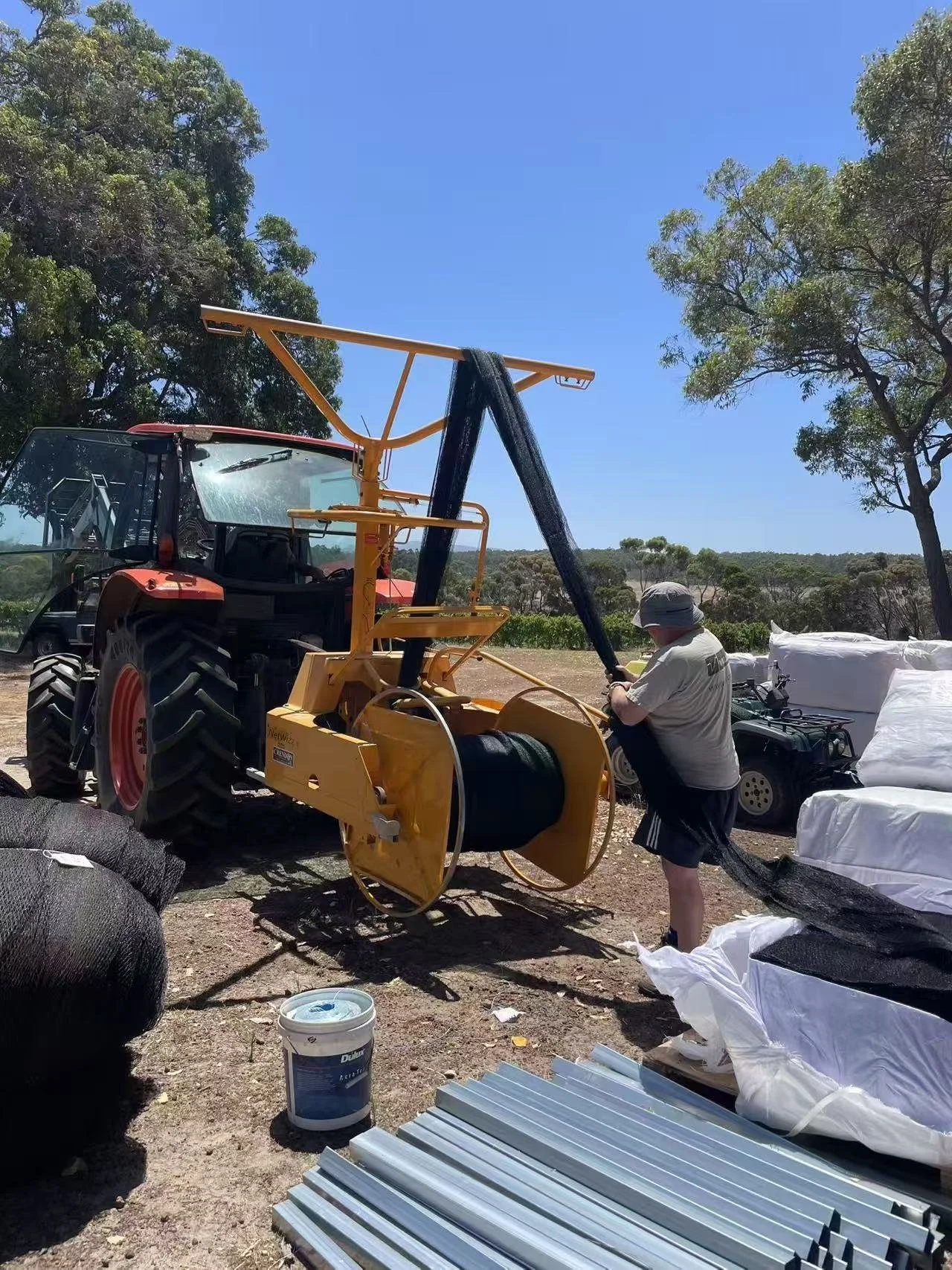
Vineyard Bird Netting
Product application, manufacturing, material assessment and delivery considerations for vineyard use.
View Project →